How to Pack a Small Beach Picnic Without Overloading Your Bag
Pack a small beach picnic with a practical checklist for food, reusable serving pieces and rubbish, so the meal fits your bag and the shore.
A small beach picnic works best when the food, serving pieces and rubbish plan fit the bag you actually carry. Use this small beach picnic checklist to keep lunch easy to serve and simpler to pack home.
Choose food that travels
Start with food that is ready to eat or easy to portion before you leave. Filled rolls, flatbread wraps, sturdy fruit and a small tub of pasta salad can make a varied meal without requiring several bowls, spoons and sauces.
Match the menu to the way you want to eat. Rolls and fruit suit a no-plate lunch; a soft salad may need a spoon and a lidded tub that can double as its serving bowl. Avoid loose toppings if they mean carrying extra containers you will barely use.
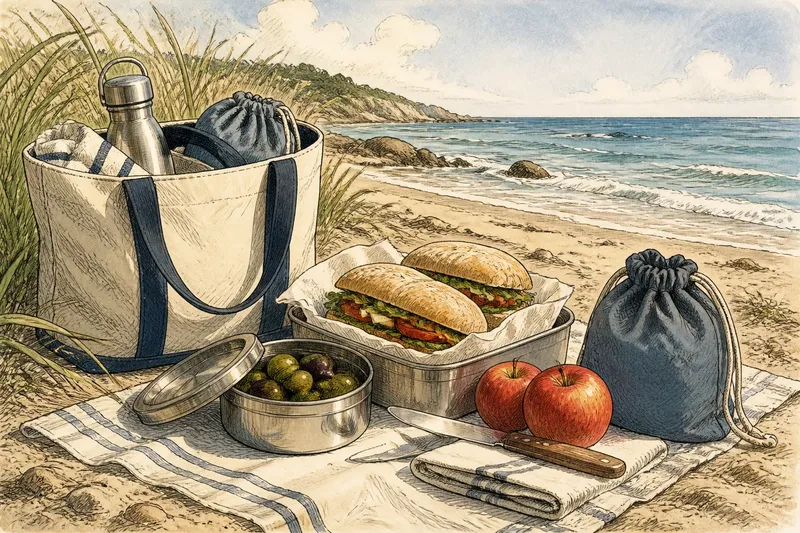
Imagine you have a small canvas tote with room for lunch and a water bottle. You pack two filled rolls, apples and a screw-top tub of olives, then use the tub as the serving dish. The result is a meal with a main, fruit and a savoury extra, without a separate bowl or serving spoon.
Small beach picnic checklist
Before packing, check each item against the meal, the bag and the conditions on shore. For every observation, make the decision that follows rather than adding equipment by habit.
- Check whether the food can be eaten by hand; if it can, leave plates at home, but if it cannot, pack one suitable plate or serving tub.
- Check whether the menu includes soft food such as pasta salad; if it does, pack one spoon, but if it does not, leave cutlery out.
- Check whether any item needs to stay chilled; if it does, use an insulated bag and cold packs, but if it does not, avoid carrying the extra cooling gear.
- Check whether a container has a secure lid; if it seals firmly, use it for transport and serving, but if it does not, choose a better-sealing container or leave that food behind.
- Check whether the spot is windy or uneven; if it is, choose low, lidded containers and wrapped food, but if it is sheltered and level, a small cloth may be enough.
- Check whether the bag has room for used items on the return; if it does, pack a washable drawstring bag to separate them, but if it does not, reduce the serving pieces before leaving.
- Check whether you have a way to contain wrappers and food scraps; if you do, keep it accessible, but if you do not, add a small rubbish bag before packing the food.
Fit the pieces to your bag
Open the bag and judge its useful space, not just its stated capacity. A narrow tote may take a flat lunch tin and bottle but resist bulky bowls. A soft-sided cooler can accommodate containers, though food and cold packs already take up room.
Pack flat items, such as a tea towel, first; nest smaller containers inside larger ones where possible. Keep anything that could leak upright and easy to reach. Remember that used plates, a damp cloth and an empty tub still need space on the way back, so a washable drawstring bag can keep them apart from clean items.
Pick reusable pieces by job
Give each item a clear purpose. A lidded tub can carry olives and serve them; a compact knife can portion fruit or cheese if the menu calls for it. If food is already wrapped and easy to hold, skip the plate.
Stainless steel is sturdy and wipes clean, though it may feel heavy in a small bag. Lightweight enamel or durable plastic can be easier to carry. A flexible silicone cup packs down, but its shape may be awkward for slippery food. A tea towel can cushion containers, provide a clean surface and hold crumbs on the return journey.
Leave duplicate tools behind. If one knife covers the menu, there is no need for a separate spreader and serving knife. One spoon may serve a salad or dip; pack it only if the food needs it.
Serve comfortably on shore
A broad, dry patch of grass can take a small cloth and a couple of plates. On sloping or windy sand, keep the arrangement compact, use stable containers and keep lids close. Choose a spot clear of the water’s reach and leave other beachgoers room to pass.
A large blanket is not essential for a small meal. A cotton tea towel or washable mat may be enough, particularly if everyone can keep food on their laps. On uneven ground, a wide, low container is less likely to tip than a tall cup. Avoid glass in busy sandy areas, where fragments can be difficult to see.
Wind favours wrapped sandwiches and fruit over loose crisps or paper napkins. A small clip can hold a cloth in place, while a lidded container keeps food covered between bites. Bring these only if the conditions call for them.
Food and rubbish?
What food suits a short picnic?
Choose a main item, a simple side and a drink that suit the people eating and the visit. Ready-to-eat food needs fewer serving pieces than a spread of separate dips and toppings.
Do you need plates and cutlery?
Bring them only if the food needs them. Rolls, fruit and parcels are easy to eat by hand, while a soft salad may call for a spoon and a shared container.
How should chilled food travel?
Use an insulated bag with cold packs for food that needs chilling, and keep the bag closed until serving. Follow the food label and storage instructions, and seek qualified food-safety advice if you are unsure how an item should be kept.
What should you do with rubbish?
Carry a small bag for wrappers, fruit cores and used napkins, and take it with you if a suitable bin is not available. Keep damp reusable cloths and used utensils separate from clean items for the journey home.
Leave room for the return
Before closing the bag, remove anything without a clear job. If a second plate is only there in case you change how you serve lunch, leave it behind; if a secure tub keeps olives from leaking, keep it. That quick edit protects space for used items and makes packing up less awkward.
For a small beach picnic, the useful choices depend on the meal, the bag and the patch of shore. Check those details before you go, then keep rubbish contained and take it away when no suitable bin is available. The return trip is easier when every packed item has a place coming home, too.