Why Promenades Invite a Slower Walk
Why promenades invite a slower walk: learn how open routes, shifting water views and places to pause can help you choose a shore-side stroll.
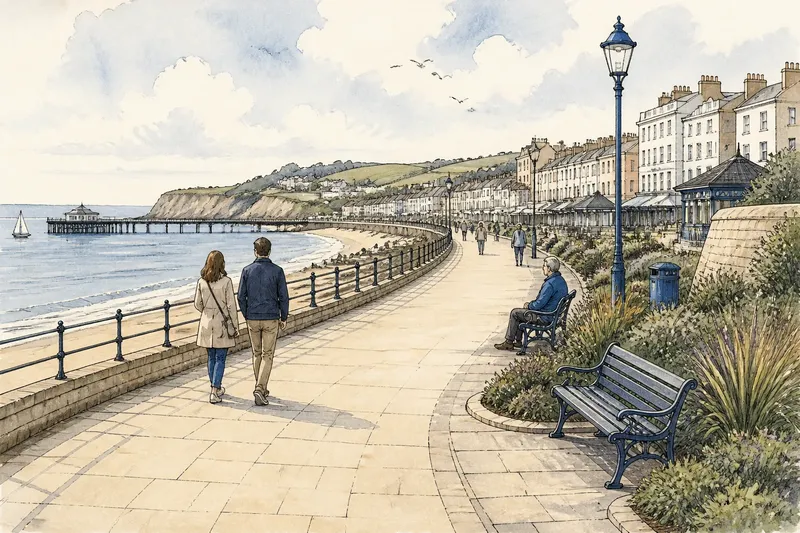
A promenade makes a slower walk feel natural by giving your eyes somewhere to go and your feet room to wander. The route may run beside the water, but its pace comes from more than the view: an open path, changing sightlines and occasional places to pause all shape how a walk feels.
That does not mean every seafront suits every outing. A broad, exposed esplanade offers a different experience from a sheltered path beside a seawall, and a busy promenade behaves differently from a quiet stretch with benches set back from the flow. Choose according to the kind of attention, company and comfort you want from the walk.
Open routes, easy pace
When a path is wide and its direction is clear, there is less need to watch every step or negotiate around tight corners. You can walk side by side, look out towards the water, or let your pace change without constantly interrupting the conversation. The sense of openness is practical as well as scenic: it leaves room for people moving at different speeds.
This kind of route fits a gentle, unhurried outing, especially if you want to walk with a companion or simply let your attention drift between the shoreline and the town. Look for a continuous paved path with enough space to share comfortably. A route that narrows around cafés, steps or busy crossings may still be attractive, but it asks for more attention and can make a slow stroll feel stop-start.
An open promenade can also feel exposed. Wind, glare and a lack of shelter are part of the setting, not a flaw in the design. If you would rather stay comfortable than take in a long, uninterrupted horizon, choose a route with sheltered sections or nearby streets where you can turn inland when conditions call for it.
Views that keep changing
Repeated views help a walk unfold without demanding a destination. The water may remain beside you, but the angle shifts as the shoreline bends, a pier comes into view or boats pass across the distance. These small changes give the eye a fresh point of focus while the route itself stays easy to follow.
A straight stretch can suit someone who wants a simple out-and-back walk: it is easy to see the route ahead and decide when to turn around. A curving promenade may feel more exploratory, with a new view appearing around each bend. Neither shape is inherently more relaxing. A clear, open sightline can be reassuring when you prefer to know where you are going; a sequence of changing views can hold your interest when a long straight path feels monotonous.
Imagine you have a free afternoon and want a quiet walk, but you are not sure how far you will feel like going. You choose a promenade that follows the bay, with a visible pier as a loose point of reference and several routes back into town. As the view changes around the curve, you can decide to continue or turn inland without treating the walk as a fixed-distance outing.
Places to pause
Benches, low walls and widened spots near a lookout create natural pauses. They make room to watch the tide, adjust a scarf or chat without stopping in the middle of the walking line. Their placement matters: a seat facing the water invites you to linger, while one tucked behind a windbreak offers a more sheltered rest.
Choose a route with frequent stopping places if your outing includes children, older relatives, sketching or simply a preference for short stretches of walking. A more uninterrupted path may fit someone who wants to keep moving and does not expect to sit down. Check that a bench is actually set back from the through-route; a seat beside a narrow pinch point can put resting visitors and passing walkers in one another’s way.
Not every pause needs a formal seat. A broad step or a quiet outlook can offer a place to stop briefly, provided it is not blocking access or occupying a working entrance. On a busy seafront, use designated seating and keep the main path clear for people walking, wheeling or pushing a buggy.
Choose by outing
The best promenade depends on what you want the walk to do. Use these situations to match the route to the day rather than looking for one ideal type of seafront.
- For an easy conversation: Choose a broad, fairly level promenade with room to walk beside someone. A clear route reduces the need to weave around other users, so conversation can remain the focus.
- For a short restorative stroll: Look for a compact stretch with an attractive outlook and a bench or sheltered stopping place. A small loop or an obvious turn-back point lets the walk feel complete without needing a distant destination.
- For changing weather: Pick a route with windbreaks, buildings or easy links to inland streets. Open water views are lovely in a breeze, but an exposed path may become tiring if there is nowhere to step out of the wind.
- For a walk with children: Favour a legible route with room to move and places to pause away from the main flow. Keep close to the group near crossings, steps and edges, and choose a section where you can turn back easily.
- For watching the water: Seek a promenade with several outlooks or benches facing the shore. A route that changes angle can offer varied views without requiring a long walk.
- For a livelier atmosphere: Walk near the seafront’s cafés, kiosks or public spaces, where people-watching becomes part of the outing. Expect more interruptions and choose a quieter parallel stretch if you want more room.
These choices can overlap. Someone walking with a friend on a breezy day may prefer a wide route with a sheltered bench, while a family might choose a busier section because toilets and refreshments are close by. Start with the main need, then accept the trade-off that matters least to you.
Read the route before setting out
A quick look at a local map can show whether the promenade is continuous, where it connects to streets and whether the return journey follows the same path. If you want an easy turnaround, a clear landmark such as a pier or harbour entrance can help you decide where to head back. A map also reveals when a scenic stretch ends at a crossing or a change in surface.
At the water’s edge, notice what the path asks of you. Smooth paving and a gentle route may suit a relaxed walk; steps, steep ramps or uneven sections may require a different choice. If you rely on a mobility aid, push a pram or need a step-free route, check local access information before setting out and allow for changes in tide or temporary closures where relevant.
Pay attention to how the promenade is used, too. Cyclists, runners, dogs and café queues can share the same seafront, but not always the same strip of pavement. A quieter time or a wider section may make a more comfortable walk if close passing bothers you. Where signs mark separate lanes or restrictions, follow them rather than assuming the whole path has one use.
What kind of walk suits you?
Does a straight promenade make a better stroll?
It can suit walkers who want an obvious direction and an easy place to turn back. If you prefer visual variety, a curved route or one with changing outlooks may hold your attention more naturally.
Which promenade suits a slow walk?
Look for a route with enough width to walk comfortably, a clear waterside view and places to pause. If shelter or frequent seating matters more than an uninterrupted horizon, choose a route that offers those features even if the view is less open.
Is a busy seafront still relaxing?
It can be, if you enjoy people-watching and do not mind a lively walking line. For a quieter experience, try a less central stretch or walk when nearby cafés and public spaces are less crowded.
How can I make a promenade walk feel unhurried?
Choose a route with a natural stopping point, such as a bench or lookout, and leave room to turn back when you feel ready. A slower pace comes more easily when the walk does not depend on reaching a distant destination.
Let the route set the rhythm
A promenade’s design offers cues, not instructions. An open path encourages an easy stride, shifting views keep attention moving and a well-placed seat makes stopping feel part of the outing. For a slower walk, choose the feature you value most—space, shelter, a changing outlook or a place to rest—and let the rest of the route support it.
When you search for why promenades invite a slower walk, the useful answer is in those small decisions: where the path opens, what comes into view and where you can pause without getting in anyone’s way. A good choice is not necessarily the longest or grandest seafront. It is the stretch whose pace fits the day you have.